
EU Council and Parliament Strike Provisional Deal Updating Organic Trade Equivalence and Certification Rules
EU negotiators agreed on updated organic rules, extending trade equivalence for 11 third countries to 2036 and easing certification thresholds for small operators.
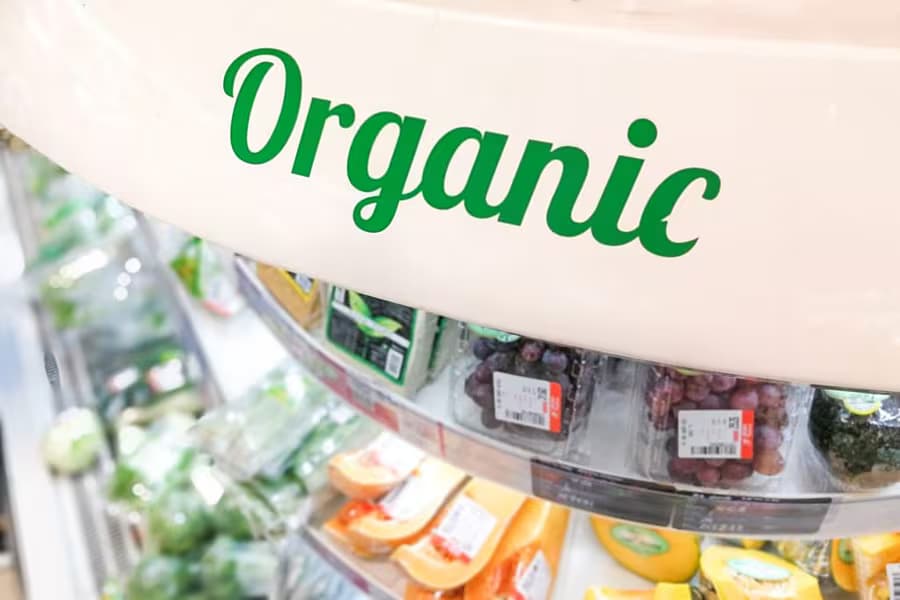
Provisional Agreement on EU Organic Framework
On October 20, 2026, the Council of the European Union and the European Parliament reached a provisional political agreement to update the framework governing organic production, labelling, certification, and trade.
The revised provisions are designed to clarify and modernize operational standards across the organic supply chain. By addressing both internal administrative processes and international trade mechanisms, the co-legislators established terms intended to regulate organic practices across production stages, retail environments, and import channels entering the European single market.
Extension of Third-Country Organic Trade Equivalence to 2036
A central component of the provisional agreement concerns the continuity of international trade arrangements for organic agri-food products. Under the agreed terms, organic trade equivalence recognized for 11 third countries is extended until December 31, 2036.
This ten-year extension directly applies to major trading partners, including the United States, Canada, New Zealand, and Argentina. The decision provides a formalized multi-year framework governing organic imports originating from these recognized trade partners, setting clear baseline terms for bilateral organic commodity flows to the European Union through the end of 2036.
Increased Certification Exemption Thresholds for Small Operators
The provisional text also introduces adjustments to the regulatory burdens placed on smaller market participants dealing in unpackaged organic goods. Specifically, the agreement increases the exemptions that allow small operators to sell unpackaged organic products without undergoing standard formal certification procedures.
The annual turnover threshold qualifying small operators for this certification exemption has been increased from €20,000 to €40,000. Alongside the financial threshold, negotiators also doubled the physical volume limit: the annual sales volume ceiling for small operators handling unpackaged organic commodities has been raised from 5,000 kilograms to 10,000 kilograms.
Stringent Standards for Use of the EU Organic Logo on Imports
While the deal extends trade equivalence frameworks, it establishes specific compliance criteria for foreign goods displaying the bloc's official visual indicator. Under the updated terms, imported organic products may only display the EU organic logo if they fulfill additional production and control requirements.
These additional compliance benchmarks specifically govern soil management, animal welfare standards, and processing methods. Consequently, third-country goods entering the European market must align directly with these defined production and control rules in order to qualify for the use of the EU organic logo on their packaging.
Related Articles

EU Council and Parliament Strike Provisional Deal on Updated Organic Farming and Trade Rules
EU Council and Parliament Strike Provisional Deal on Updated Organic Farming and Trade Rules

EU Reaches Deal to Extend Third-Country Organic Equivalence to 2036 and Raise Small Operator Exemptions
EU Reaches Deal to Extend Third-Country Organic Equivalence to 2036 and Raise Small Operator Exemptions
EU Reaches Agreement to Extend Third-Country Organic Equivalence to 2036 and Adjust Certification Rules
EU Reaches Agreement to Extend Third-Country Organic Equivalence to 2036 and Adjust Certification Rules
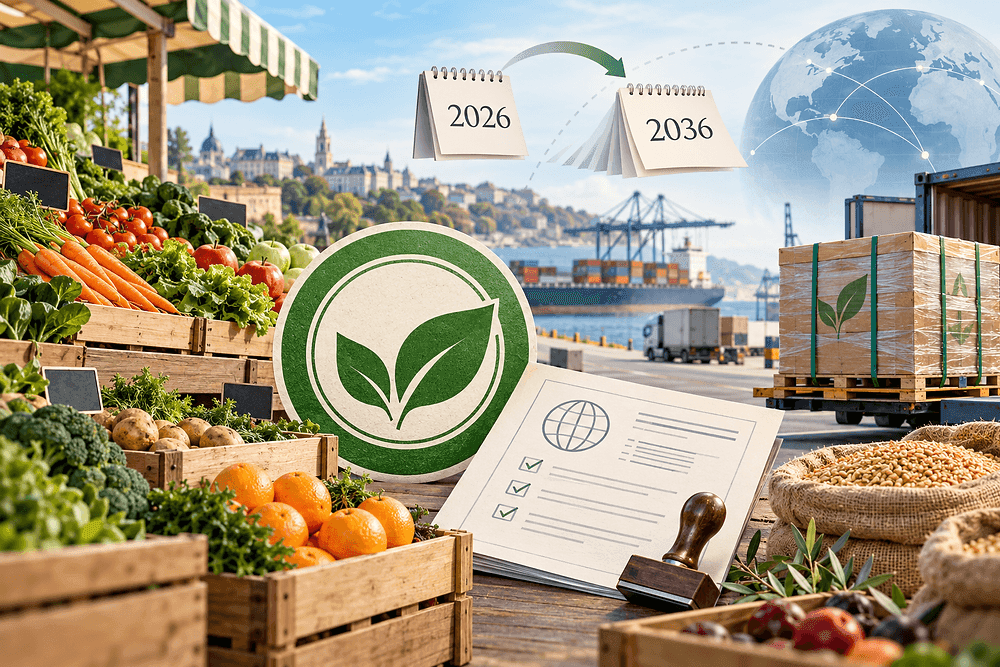
EU Reaches Provisional Agreement to Extend Organic Trade Equivalence and Ease Small Operator Rules