
EU Trade Mission to Mexico Advances Implementation of Tariff Elimination Deal
EU Agriculture Commissioner Christophe Hansen leads a business mission to Mexico to advance the modernized EU-Mexico trade agreement, targeting the elimination of 95% of agri-food tariffs.
High-Level Mission Targets Implementation of Modernized Agreement
European Union Agriculture Commissioner Christophe Hansen led a 120-member business delegation to Mexico from November 16 to November 19, 2026. The high-level trade mission aimed to promote and advance the implementation of the modernized EU-Mexico trade agreement. Signed on May 22, 2026, the updated framework is structured to eliminate 95% of Mexico's remaining tariffs on European agricultural and food products, opening new pathways for European exporters in a key Latin American market.
Mexico currently stands as the European Union's second-largest agri-food export destination within Latin America. Annual trade flows see EU food and beverage exports to Mexico valued at approximately €2.5 billion. The recent trade mission focused heavily on translating the signed agreement into operational market access for European producers, addressing practical commercial steps required to operationalize tariff relief across multiple supply chains.

Key Agricultural Sectors and Commodity Beneficiaries
The impending elimination of 95% of Mexico's agricultural tariffs is set to generate substantial advantages for a broad spectrum of European food and agricultural producers. Key beneficiaries identified under the modernized agreement include producers of various meat categories, encompassing beef, pork, and poultry. Additionally, dairy producers—including exporters of European cheeses—are positioned to gain significantly from reduced trade friction and lowered cost structures.
Beyond proteins and dairy, the agreement delivers comprehensive market access improvements for major Mediterranean and continental European exports. Producers of olive oil, wine, and spirits stand to capture enhanced commercial opportunities within the Mexican market. Processed agricultural products generally are also incorporated into the tariff-reduction schedules, offering wider distribution potential for specialized European food manufacturers seeking expansion in Latin America.
Progress on Sanitary Measures and Organic Trade Roadmaps
Alongside tariff reduction discussions, the November 2026 mission achieved practical headway on non-tariff trade barriers and regulatory alignment. Both European and Mexican parties registered concrete progress regarding sanitary and phytosanitary (SPS) measures, which govern food safety and agricultural import compliance.
Furthermore, the delegations agreed to establish a dedicated roadmap by early 2027. This upcoming framework is designed to work toward regulatory equivalence for organic products, facilitating smoother cross-border certification and trade for organic agricultural commodities between the European Union and Mexico.
Related Articles
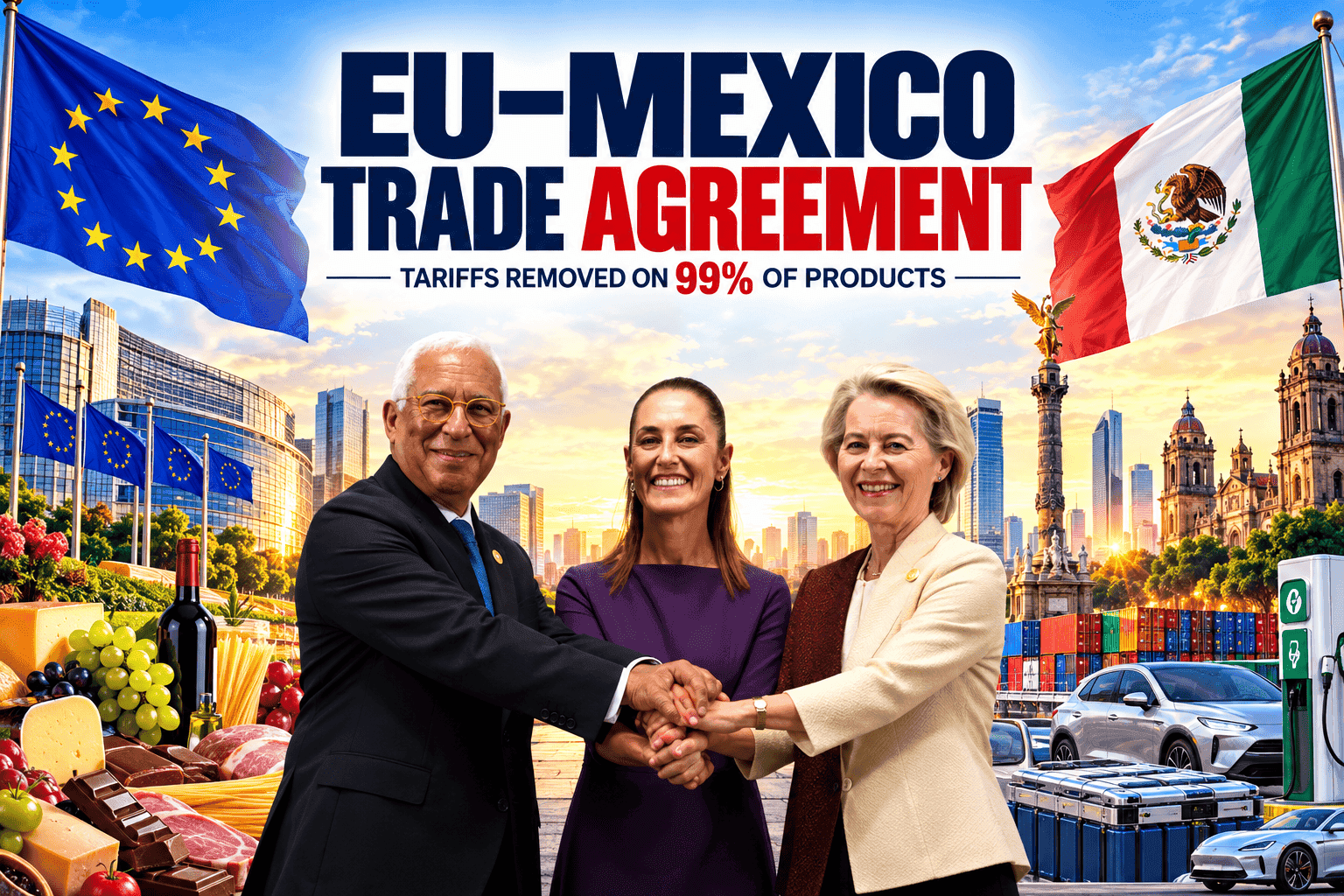
EU Agri-Food Trade Mission to Mexico Targets Market Access Under Modernised Agreement
EU Agri-Food Trade Mission to Mexico Targets Market Access Under Modernised Agreement
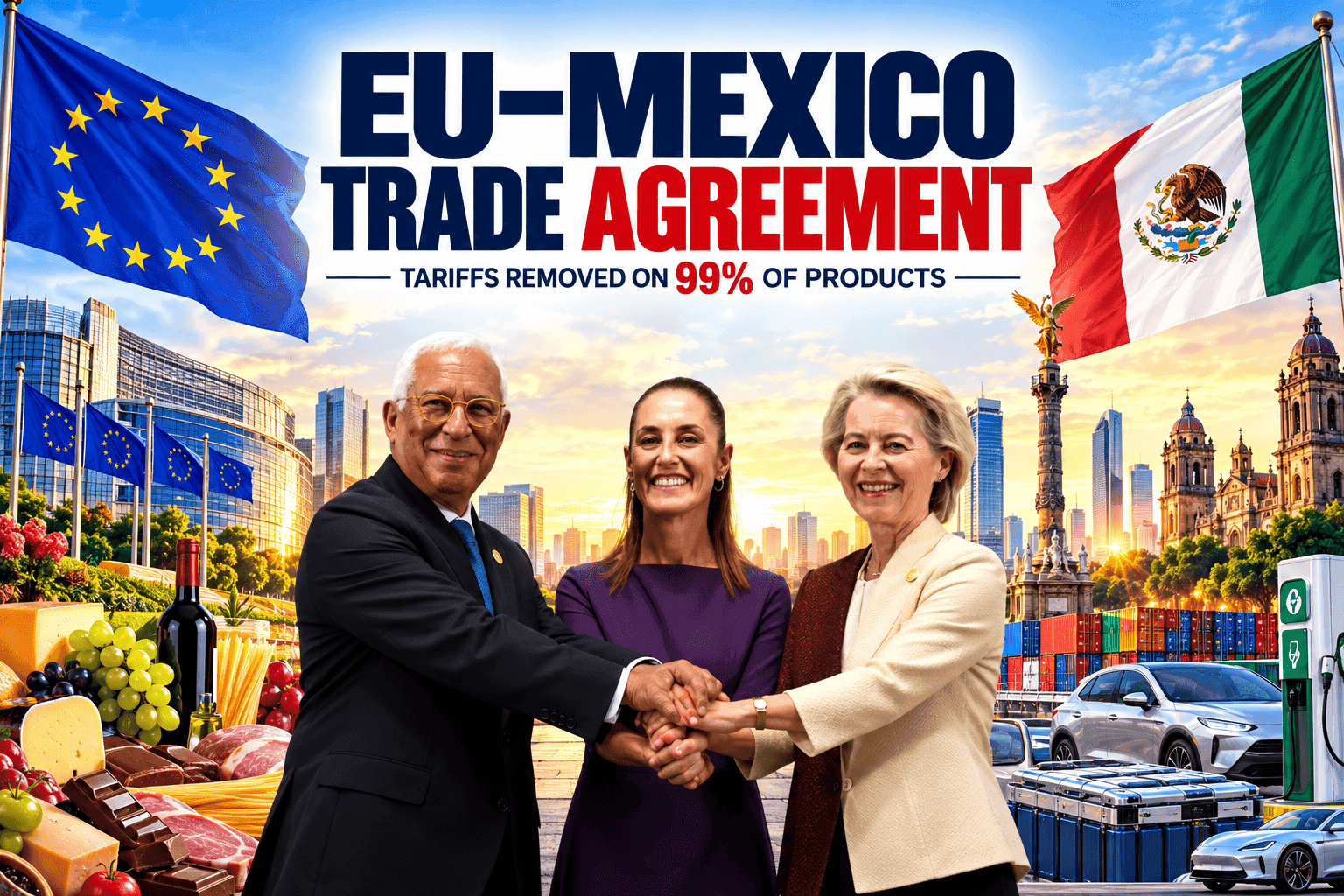
EU-Mexico Trade Modernization: Mexico to Abolish 95% of Tariffs on European Agri-Food Imports
EU-Mexico Trade Modernization: Mexico to Abolish 95% of Tariffs on European Agri-Food Imports
UK and EU Finalize Draft SPS Agreement to Remove Post-Brexit Food Trade Checks
UK and EU Finalize Draft SPS Agreement to Remove Post-Brexit Food Trade Checks
UK and EU Finalize Draft SPS Agreement to Remove Routine Agricultural Trade Checks