
FEWS NET Identifies Very Strong 2026/27 El Niño as Serious Risk to African Food Security
FEWS NET warns that a very strong 2026/27 El Niño threatens agricultural yields in Africa, projecting dry conditions in Southern Africa and the Sahel alongside flood risks in the Horn of Africa.

Special Report Confirms Very Strong El Niño Classification
A Special Report published in October 2026 by the Famine Early Warning Systems Network (FEWS NET) confirms that the 2026/27 El Niño phenomenon has intensified, reaching "very strong" levels. The determination establishes the meteorological event as a major driver of anticipated weather disruption across key agricultural zones.
The agency emphasizes that the designation of a very strong El Niño serves as a critical early warning for public institutions, market analysts, and humanitarian operators. The primary concern centers on agricultural yield disruptions and the compounding effects these climatic shocks can have on vulnerable populations heading into the 2026/27 production calendar.
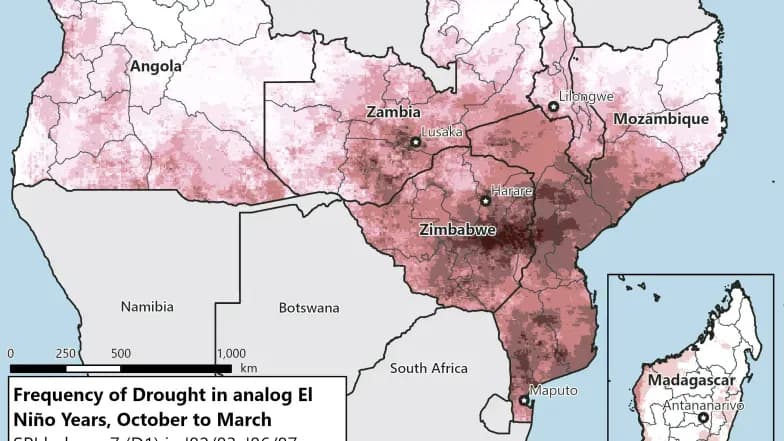
Diverging Regional Rainfall Profiles: Southern Africa and the Sahel
Meteorological projections outlined in the report highlight substantial rainfall anomalies across the African continent. In Southern Africa, the assessment projects below-average rainfall throughout the core October 2026 to March 2027 rainy season. Given that this window corresponds directly to critical planting and crop development periods, suppressed precipitation poses an immediate threat to regional agricultural yields.
Alongside Southern Africa, below-average rainfall is also projected for the Sahel. For agricultural and trade stakeholders, depressed rainfall patterns across both the Sahel and Southern Africa signal potential contraction in local food availability, directly impacting national and cross-border grain flows.
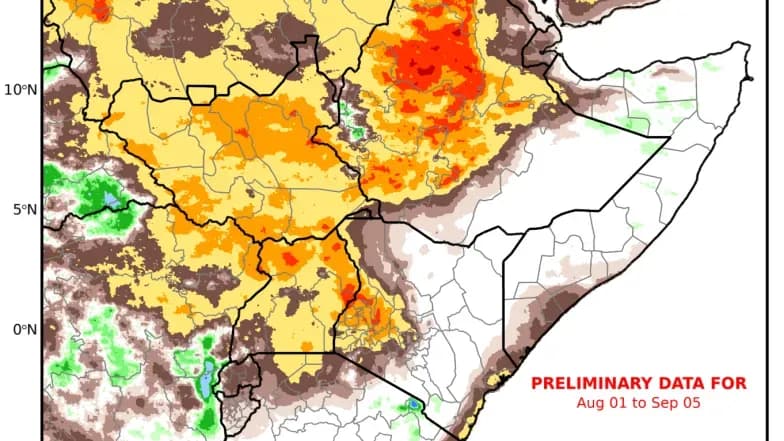
Heightened Flood Hazards in the Horn of Africa
In contrast to the dry anomalies projected across southern and western regions, East Africa—specifically the Horn of Africa—is forecast to face heavy rains and heightened flood risks during the October to December 2026 window.
While precipitation is vital for replenishing water resources, intense rainfall and flooding during late 2026 present distinct operational and logistical hazards. Excessive water levels can compromise standing crops, wash away agricultural land, and impair transport infrastructure necessary for domestic distribution and port-to-inland transit routes.
Regions of Highest Concern and Humanitarian Mobilization
FEWS NET identifies unimodal East Africa and Southern Africa as the geographic zones of highest concern for acute food insecurity outcomes linked to the 2026/27 El Niño event. The convergence of projected drought conditions in the south and extreme rainfall risks in the east places acute pressure on regional food systems.
Consequently, the agency highlights the early warning status of El Niño as an imperative for governments and international relief partners. The report stresses that humanitarian food assistance and targeted supply interventions must be coordinated and scheduled well before the peak lean season impacts manifest, mitigating severe household consumption gaps before local supply shortfalls peak.
Related Articles
Philippine El Niño Farm Losses Hit ₱6.87 Billion, Raising Rice and Corn Import Demand
Philippine El Niño Farm Losses Hit ₱6.87 Billion, Raising Rice and Corn Import Demand
Brazil's November Riddle: Navigating a Climate of Extreme Contrasts
Brazil's November Riddle: Navigating a Climate of Extreme Contrasts
FAO Food Price Index Climbs to Nearly Four-Year High Amid Cereal and Transport Strains
FAO Food Price Index Climbs to Nearly Four-Year High Amid Cereal and Transport Strains
Winter's Shifting Canvas: Unpacking South Africa's Diverse Cold Front Experience