
USDA Unveils $8 Billion Harvest Fuel Relief Program to Offset Agricultural Input Costs
The USDA has introduced an $8 billion Harvest Fuel Relief program under the CCC Charter Act, offering one-time payments to offset 2026 harvest fuel and input expenses.
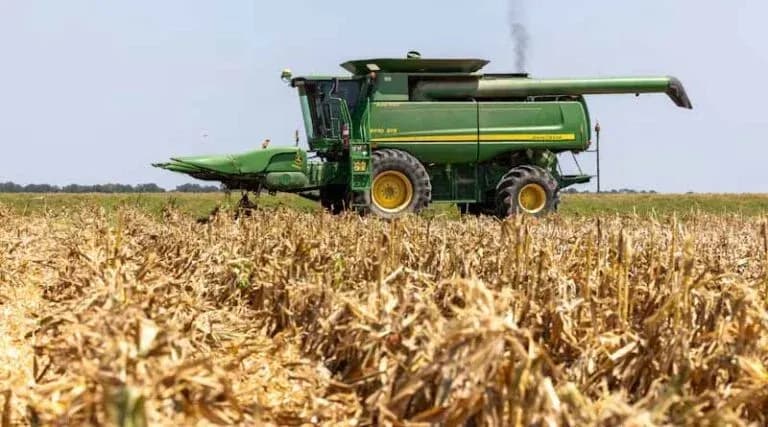
Launch of the Harvest Fuel Relief Program
On October 19, 2026, the United States Department of Agriculture (USDA) announced the establishment of the Harvest Fuel Relief (HFR) program, committing $8 billion in federal support to the agricultural sector. The program is designed to deliver one-time payments to producers facing elevated operating expenses, targeting fuel and input costs incurred during the 2026 harvest season.
Agricultural producers routinely contend with financial exposure during the critical harvest window, when fuel and input consumption peaks. By establishing this targeted relief mechanism for the 2026 crop year, the USDA aims to ease balance sheet strains across participating farming operations through direct financial offsets.
Statutory Authority and Operational Framework
The Harvest Fuel Relief initiative derives its legal and financial backing from the Commodity Credit Corporation (CCC) Charter Act. The CCC mechanism allows the USDA to tap into established funding frameworks to execute agricultural support directives efficiently.
Execution and operational oversight of the program are assigned to the USDA's Farm Service Agency (FSA). The FSA will manage administrative tasks, handling producer records, program participation verification, and distribution channels to ensure disbursements align with federal requirements.
Standardized Payment Methodology and Input Metrics
Rather than relying on ad-hoc payment distributions, the USDA has established a standardized, formulaic methodology to calculate individual relief disbursements. This calculation brings together multiple administrative and economic data points across the department's analytical arms.
The payment formula incorporates three primary metrics:
- Reported Acreage: Planted acreage figures filed directly with the Farm Service Agency.
- Cost-of-Production Estimates: Analytical expenditure baselines compiled by the Economic Research Service (ERS).
- Commodity Metrics: Comprehensive yield determinations and price projections generated by the USDA.
By unifying administrative acreage verification with departmental economic metrics, the framework establishes a structured protocol intended to reflect production baselines across recipient operations.
Implementation Timelines: Title I and Non-Title I Sectors
The rollout of the Harvest Fuel Relief initiative will proceed in phases based on commodity designations. Commodity-specific payment rates for major agricultural commodities under Title I are scheduled for formal publication in November 2026.
Following the distribution of rates for Title I crops, the USDA will release specific schedules and rates for non-Title I commodities. This secondary classification broadens the program scope to encompass producers beyond traditional row crops, including specialty crop producers as well as commercial fisheries.
Related Articles
USDA Launches $8 Billion Harvest Fuel Relief Program to Offset Agricultural Input and Energy Costs
USDA Launches $8 Billion Harvest Fuel Relief Program to Offset Agricultural Input and Energy Costs

USDA Unveils $8 Billion Harvest Fuel Relief Program to Offset Operational Input Costs
USDA Unveils $8 Billion Harvest Fuel Relief Program to Offset Operational Input Costs
USDA Directs $825 Million to International Food Assistance Programs
USDA Directs $825 Million to International Food Assistance Programs
USDA Allocates $1.34 Billion Across Eight Projects to Expand Domestic Fertilizer Capacity