
USDA Launches $8 Billion Harvest Fuel Relief Program to Offset Agricultural Input and Energy Costs
The USDA has announced an $8 billion Harvest Fuel Relief program funded by the CCC to provide one-time payments offsetting diesel and input costs for U.S. farmers.
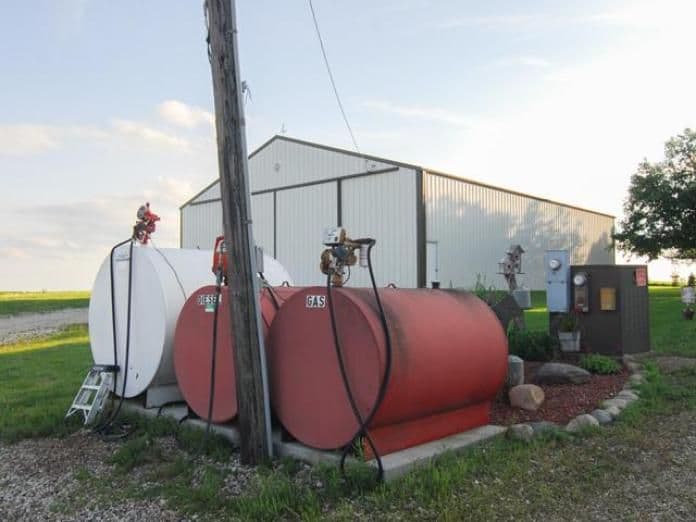
Capital Allocation for 2026 Harvest Expenses
On October 19, 2026, the United States Department of Agriculture (USDA) announced the establishment of the Harvest Fuel Relief (HFR) program, committing $8 billion in targeted financial support for domestic agricultural producers. The initiative is structured to deliver one-time direct payments to farmers across the country, aiming specifically to mitigate the financial pressure caused by elevated diesel fuel prices and rising input expenses during the 2026 harvest window.
Operational expenses during harvest cycles represent a critical financial outlay for producers, particularly when fuel costs increase substantially. Through the deployment of this capital, the federal administration seeks to assist farm operations facing elevated operational overheads as field operations and commodity harvesting reach peak activity during the autumn season.
Funding Structure and Administrative Execution
The $8 billion relief initiative is financed directly through the Commodity Credit Corporation (CCC), the USDA institution historically utilized to stabilize, support, and protect farm income and agricultural prices. By drawing upon the funding authority of the CCC, the relief measure circumvents immediate legislative appropriations cycles to deliver direct liquidity.
Execution and operational rollout of the HFR program will be directed by the USDA Farm Service Agency (FSA). The FSA, which oversees farm programs and county-level administrative infrastructure nationwide, will process applications, review documentation, and distribute the one-time relief funds to eligible operations.
Uniform Payment Formula and Commodity Schedules
To distribute the $8 billion across diverse agricultural sectors, the USDA established a standardized, uniform formula rather than relying on flat per-farm stipends. Total payments issued to participating growers will be evaluated using three core metrics:
- Planted acreage totals officially reported to the Farm Service Agency (FSA).
- Input and operational expenditure estimates generated by the Economic Research Service (ERS).
- Production yields and commodity valuations published via the World Agricultural Supply and Demand Estimates (WASDE) reports.
By integrating acreage data with ERS production cost metrics and WASDE price and yield benchmarks, the program calculates payment baselines calibrated to specific crops and regional production realities. Specific payment rates for Title I agricultural commodities are scheduled to be released in November 2026. Detailed payment structures and terms for additional sectors, including specialty crops and fisheries, will be determined at a later stage.
Program Eligibility and Risk Management Terms
Under the regulatory framework published for the HFR program, participation does not require producers to hold active federal crop insurance policies. Farmers who opted out of crop insurance coverage retain full eligibility to apply for and receive one-time relief funds based on their verified acreage and crop classifications.
Despite this waiver of insurance preconditions, the USDA has reiterated its advisory guidance encouraging all agricultural producers to utilize risk management tools to navigate operating hazards and ongoing market volatility.
Related Articles
USDA Directs $825 Million to International Food Assistance Programs
USDA Directs $825 Million to International Food Assistance Programs

FARM+ Program Expands Sustainable Agriculture and Input Transition with Over $1 Billion Investment
FARM+ Program Expands Sustainable Agriculture and Input Transition with Over $1 Billion Investment
Grain Markets Position Ahead of October USDA WASDE Report
Grain Markets Position Ahead of October USDA WASDE Report

Hormuz Shipping Disruptions Drive Up Agricultural Prices as IFAD Warns of Threat to Global Food Security