
World Bank Forecasts 18% Cumulative Increase in Global Food Commodity Prices Through 2027
The World Bank projects an 18% cumulative increase in food commodity prices through 2027, driven by shipping disruptions, input costs, and climate shocks.
Baseline Outlook: Food Commodity Price Projections Through 2027
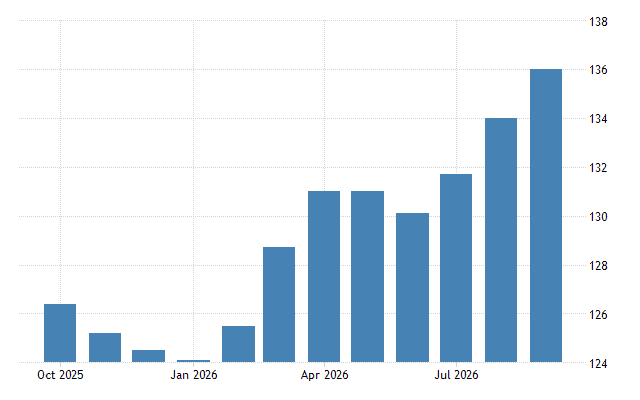
According to the World Bank's October 2026 Commodity Markets Outlook, international food commodity markets face prolonged inflationary pressure over the next two years. The multilateral lender projects that food commodity prices will advance by approximately 10% in 2026, followed by a further 7% increase in 2027, amounting to an 18% cumulative rise over the forecast period.
The trajectory for food commodities unfolds against a volatile backdrop across broader primary commodity markets. Overall global commodity prices are anticipated to climb by 23% in 2026 before undergoing a 7% decline in 2027. While broad commodity indices are expected to see some downward adjustment in the latter year, food commodity prices are projected to maintain upward momentum, compounding cost pressures for international buyers, food processors, and import-dependent nations.
Supply-Side Drivers: Shipping Disruptions, Climate Impacts, and Input Costs
The World Bank attributes the projected 18% cumulative rise in agricultural food prices to compounding geopolitical, climatic, and input-related factors.
A primary catalyst stems from conflict-related disruptions affecting international shipping routes, particularly conflicts in the Middle East that have hampered grain shipments and maritime trade corridors. These logistical interruptions have added freight friction and heightened delivery risks across global agricultural supply chains.
In addition to transport bottlenecks, production has been constrained by environmental challenges. The report identifies the adverse impact of El Niño on agricultural harvests as a central contributor to tightening global supplies. At the same time, farm balance sheets and production economics remain stressed by elevated operational expenses, with high costs for essential agricultural inputs—specifically fuel and fertilizer—continuing to exert sustained upward pressure on global food commodity benchmarks.
Risk Assessment: Potential Volatility Under the Adverse Scenario
Beyond the baseline forecast, the World Bank outlined an adverse risk scenario that could significantly worsen food commodity price inflation. Under conditions where geopolitical conflict intensifies or where the effects of El Niño prove more severe than assumed in baseline models, international food commodity prices could surge by an additional 12% above the projected baseline.
Such a deviation presents acute operational risks for international trade participants, commodity importers, and commercial food supply chains. With food commodity prices already slated to rise cumulatively by 18% across 2026 and 2027, an adverse shock of this magnitude would further amplify procurement expenditures, elevate global food security concerns, and tighten margin pressures across downstream agricultural distribution networks.
Related Articles

Global Food Inflation Set to Accelerate Through 2027 as Cumulative Supply Shocks Mount
Global Food Inflation Set to Accelerate Through 2027 as Cumulative Supply Shocks Mount
Global Food Commodity Prices Reach Highest Level Since 2022 Amid Freight and Weather Pressures
Global Food Commodity Prices Reach Highest Level Since 2022 Amid Freight and Weather Pressures
FAO Food Price Index Climbs to Nearly Four-Year High Amid Cereal and Transport Strains
FAO Food Price Index Climbs to Nearly Four-Year High Amid Cereal and Transport Strains

FAO Food Price Index Climbs to Highest Level Since November 2022