
Hormuz Shipping Disruptions Extend Fertilizer Price Pressures into Ninth Month
Ongoing maritime instability in the Strait of Hormuz keeps global fertilizer prices elevated into late October 2026, challenging agricultural input markets.
Failure of Truce Leaves Key Maritime Corridor Constrained
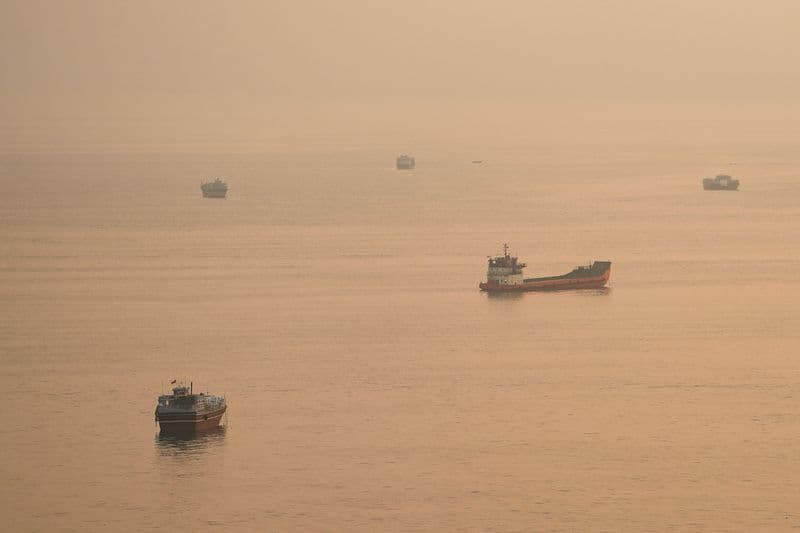
The disruption of commercial shipping through the Strait of Hormuz has entered its ninth consecutive month as of late October 2026, leaving international agricultural supply chains exposed to elevated input costs. Diplomatic interventions aimed at de-escalating the crisis have stalled, with a 14-point ceasefire memorandum of understanding signed on June 17, 2026, failing to normalize shipping conditions across the strategic waterway.
Because the June framework was unable to secure maritime transit, vessel traffic through the corridor remains significantly impeded. For global agribusiness and international trade operators, the continuation of conflict has prolonged supply chain uncertainties. Rather than seeing a return to regular shipping volumes and normalized operating conditions, global fertilizer prices remain significantly above pre-crisis benchmarks into late October 2026, sustained by persistent logistical bottlenecks and geopolitical instability.

Gulf Export Fundamentals and Upstream Constraints
The persistence of the maritime crisis strikes at the heart of global nutrient supply networks. The Gulf region represents an indispensable hub for agricultural inputs, typically accounting for approximately 30 percent of total global urea exports. In addition to nitrogen supplies, the region provides a large share of the global sulfur production that is essential for manufacturing phosphate fertilizers.
With transit through the Strait of Hormuz severely restricted, global trade has been cut off from regular access to these export volumes. The combination of constrained urea shipments and curtailed sulfur feedstock availability has exerted compounding pressure on global crop nutrition markets. As raw materials and finished products face severe transit barriers, downstream fertilizer production facilities and distributor networks worldwide have had to absorb sustained supply constraints, keeping market valuations elevated.
Importing Nations Deploy Emergency Interventions
The extended period of inflated nutrient prices and compromised availability is placing mounting pressure on major importing countries and agricultural economies. The sustained surge in phosphate fertilizer costs, driven by upstream sulfur supply restrictions, has forced governments to intervene directly to shield primary producers from prohibitive production expenses.
In response to these persistent price surges and acute supply shortages, India has extended emergency subsidy support specifically to maintain phosphate fertilizer affordability for its agricultural sector. As the maritime conflict drags through its ninth month without a diplomatic or logistics resolution in sight, state-backed financial buffers such as emergency subsidies are becoming critical to sustaining field-level application rates, highlighting how deeply the Hormuz impasse continues to distort global agricultural trade.
Related Articles
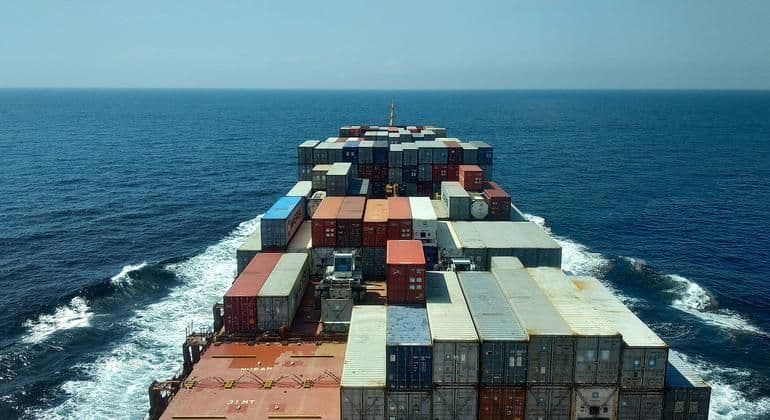
Hormuz Shipping Disruptions Threaten Global Fertilizer Flows and Crop Seasons
Hormuz Shipping Disruptions Threaten Global Fertilizer Flows and Crop Seasons
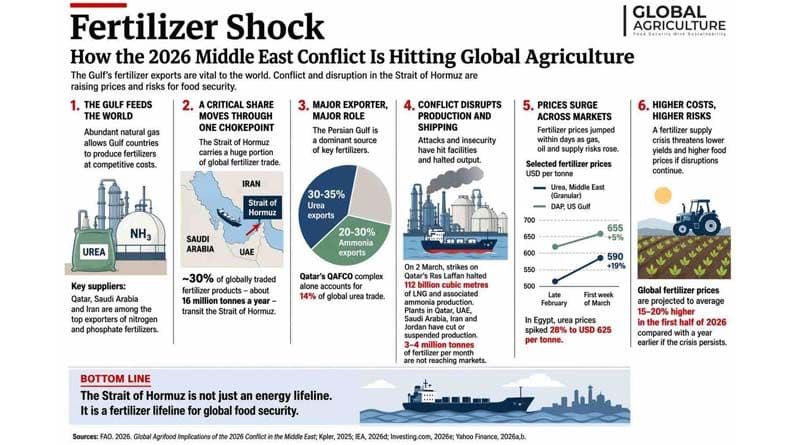
S&P Global Report Highlights Strait of Hormuz Fertilizer Logistics Risks and Global Food Security Concerns
S&P Global Report Highlights Strait of Hormuz Fertilizer Logistics Risks and Global Food Security Concerns
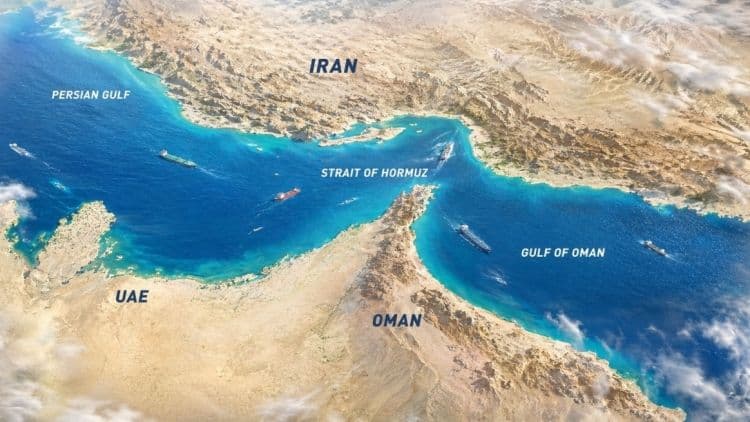
Strait of Hormuz Disruptions Threaten Global Fertilizer Trade and African Agriculture
Strait of Hormuz Disruptions Threaten Global Fertilizer Trade and African Agriculture
UN Warns Strait of Hormuz Disruptions Threaten Global Fertilizer Supply and Planting Seasons